IoT Card Selection for Battery Swap Cabinet Operations: How Shared Data Pools Break Single-Card Limits
After scaling up battery swap cabinets, the per-card traffic cap has become a bottleneck for device online rates. This article compares two shared traffic pool designs and explains how an uncapped pool aligns with real-world consumption patterns in battery swap operations, helping operators maintain high device uptime within cost limits.
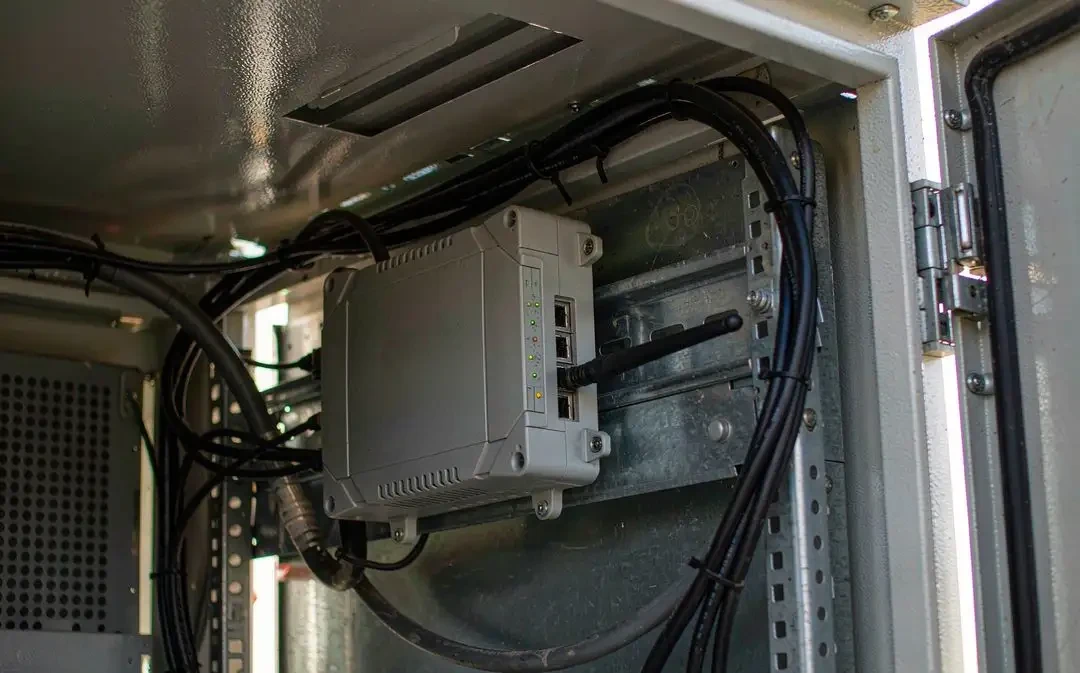
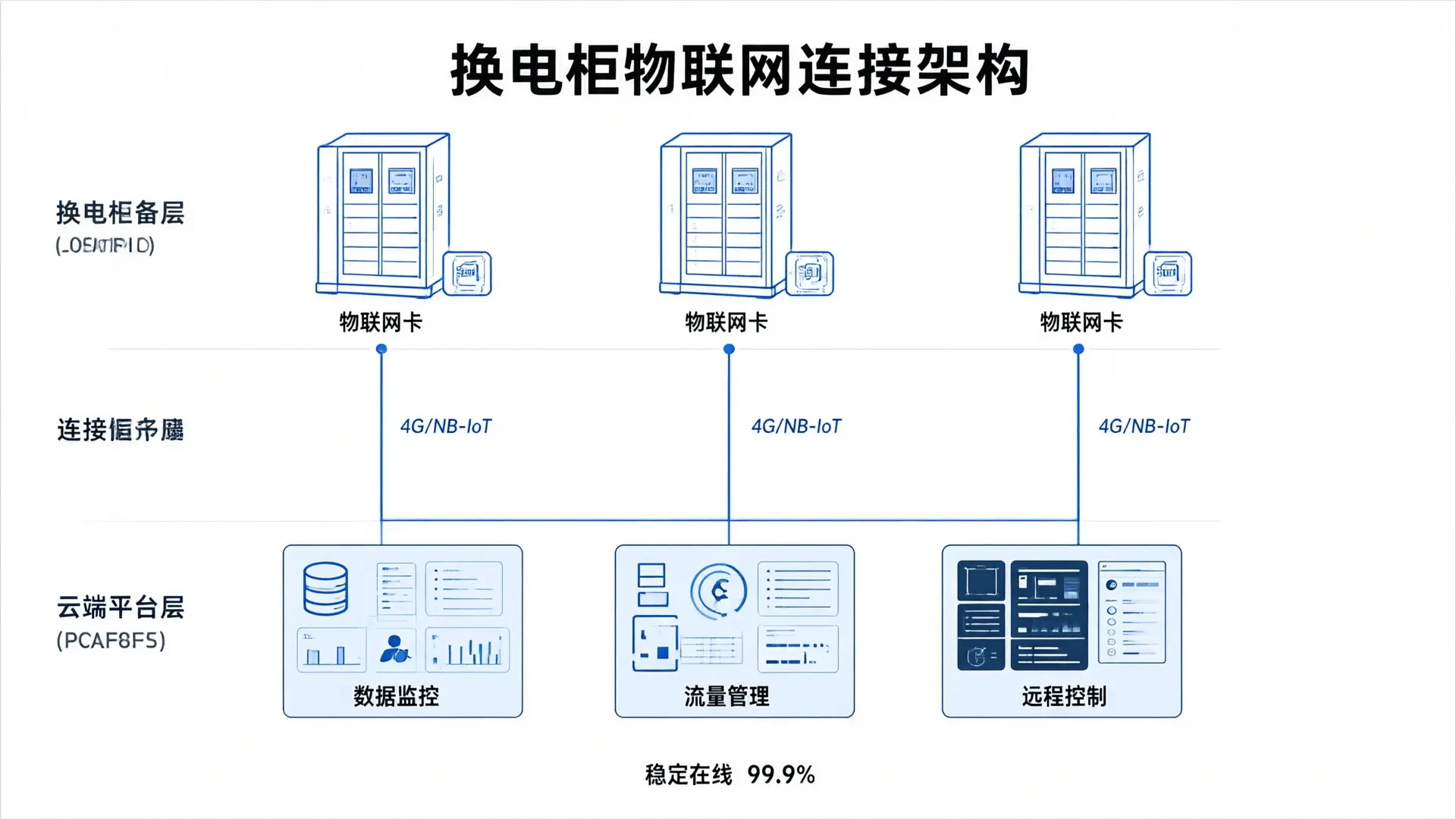
Battery swap cabinet deployment and operations rely on device connectivity as the foundational infrastructure. Each cabinet must report battery status in real time, receive remote commands, and handle user QR code authentication—all of which depend on a stable, always-on IoT SIM card. As operations scale from a few dozen to hundreds of cabinets, traffic allocation strategy becomes a critical variable affecting both operational costs and device uptime.
Why does the single-card limit become a bottleneck?
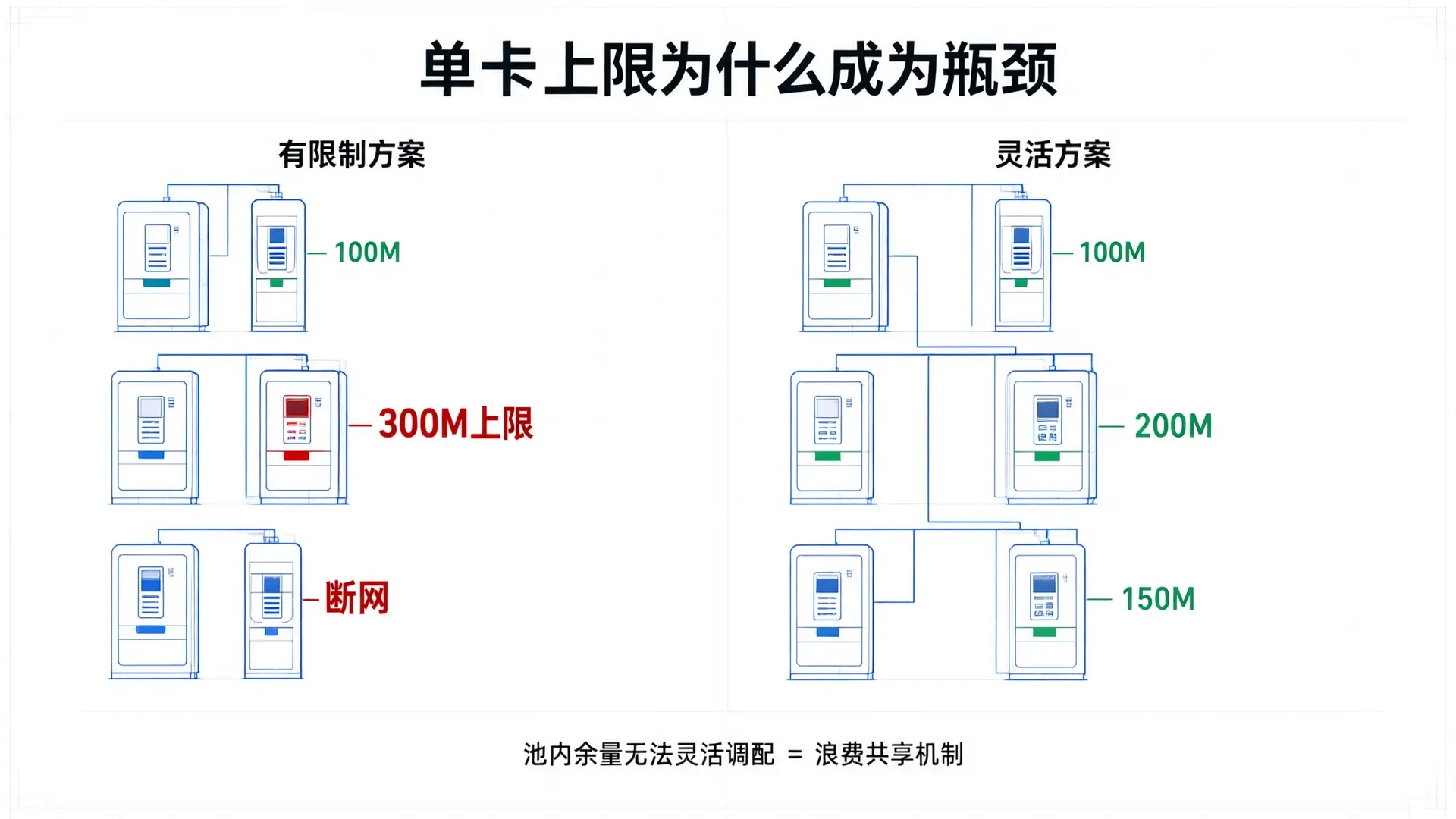
The monthly base data requirement for a single SIM card in a battery swap cabinet is typically around 100 MB, but actual consumption is not uniform. Some cabinets consume significantly more data than average due to factors like location, usage frequency, or firmware version. If the data pool plan imposes a monthly cap per SIM card—such as 300 MB—high-consumption cabinets will lose connectivity once they hit the limit, directly impacting user swapping experience and platform dispatch efficiency.
Some shared data pool solutions from certain vendors impose restrictions like this: while the total pool appears ample, individual SIMs hit caps. This design essentially shifts risk to operators and prevents flexible reallocation of unused data within the pool, undermining the purpose of a shared model.
How the Unlimited Shared Pool Works
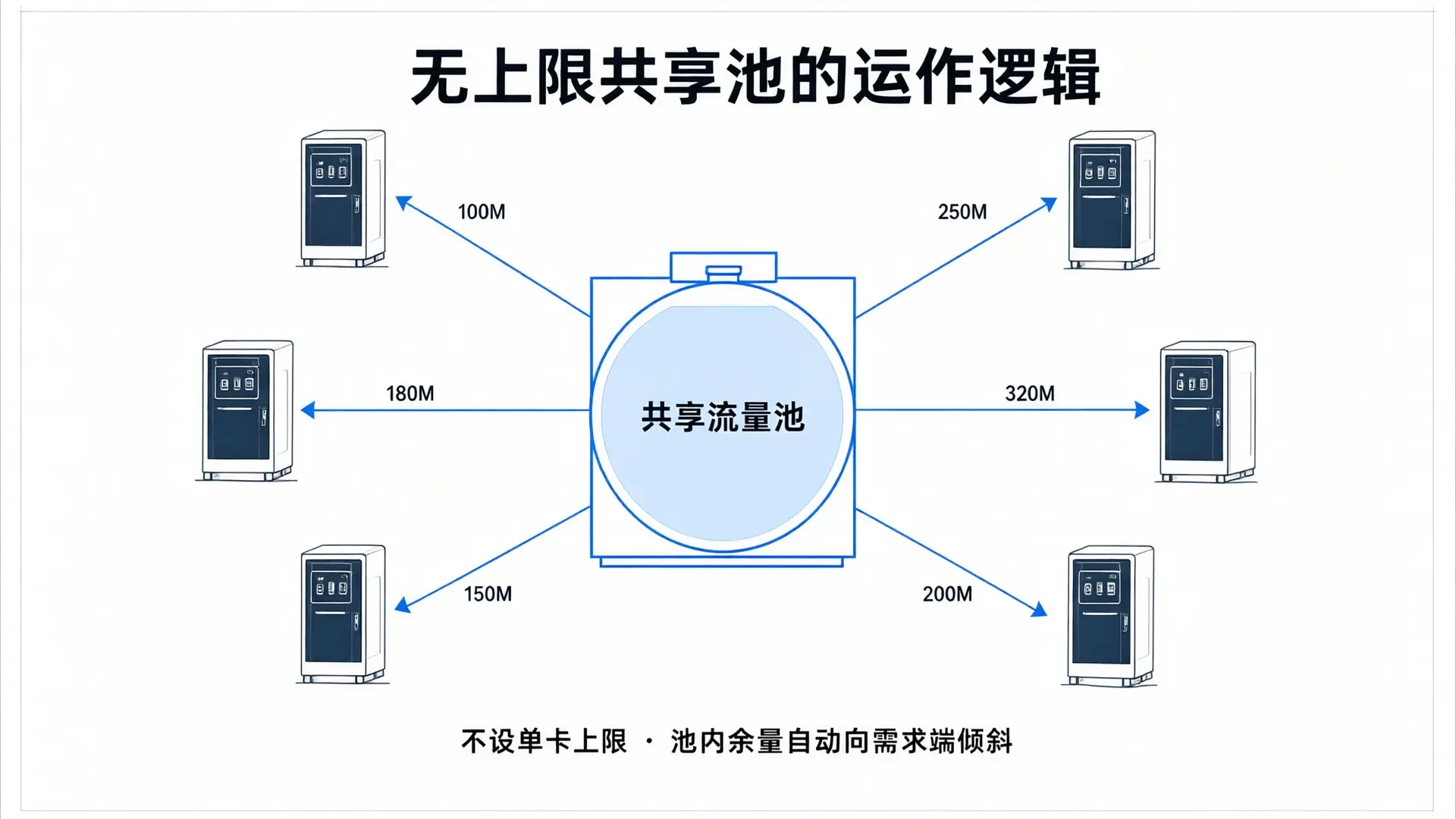
Our shared traffic pool has no monthly limit per card. Total pool traffic is deducted based on actual usage. Whether a single cabinet consumes 100 MB or more, it draws from the same resource pool without additional limits. Operators don't need to estimate usage per unit or purchase large plans for high-consumption cabinets; excess capacity in the pool automatically shifts to meet demand.
This mechanism adds real value to battery swap cabinet operations: during the initial rollout, traffic patterns are unstable and consumption varies widely across locations. An uncapped shared pool lets operators flexibly allocate resources while data is being gathered, rather than being constrained by fixed quotas.
The value of IoT SIMs lies not in the card itself, but in the underlying traffic orchestration capabilities and service responsiveness. When selecting a traffic pool solution, operators must verify that the entire mechanism aligns with their actual consumption patterns—not just the per-card rate.