Is industrial VPDN data collection frequently losing sync? How to ensure stable intranet data transmission in factories
VPDN industrial data acquisition terminals in mining/manufacturing enterprises and water treatment pumping stations frequently experience tunnel jitter and disconnections, causing production data synchronization interruptions. This paper analyzes the limitations of generic VPDN in business priority, link redundancy, keep-alive mechanisms, and link monitoring, and proposes a dual-tunnel redundancy and breakpoint resume solution tailored for 4G/5G industrial private network scenarios.
VPDN industrial data acquisition terminals for mining and manufacturing enterprises and water treatment pump stations require extremely high communication tunnel stability.
Many projects function normally during local debugging for protocol acquisition and point reading. However, once deployed, the dedicated network tunnel experiences intermittent jitter and reconnections, causing real-time data synchronization to stop. Electromagnetic interference from factory inverters and motors, combined with concurrent reporting from multiple collection terminals in the same area, strains VPDN tunnel resources. This leads to severe transmission latency or disconnections, preventing the remote SCADA platform from continuously acquiring device operating parameters. Consequently, production monitoring and energy consumption statistics are compromised.
Engineers repeatedly verified IP addresses, firewalls, and collection protocols, but the intermittent tunnel disconnection issue remained unresolved.
Traditional generic VPDN access solutions cannot meet the high stability requirements of industrial data collection.
Standard VPDN tunnels lack business priority differentiation, causing real-time collection packets and device diagnostic data to share tunnel resources. During concurrent traffic, packet queuing leads to timeouts. The solution relies on a single tunnel link without redundant backup. It lacks keep-alive and fast reconnection mechanisms, so even brief disconnections result in production data loss. Weak link monitoring capabilities prevent 7×24 continuous monitoring of tunnel connectivity quality and latency jitter, making it difficult to identify potential issues in advance.
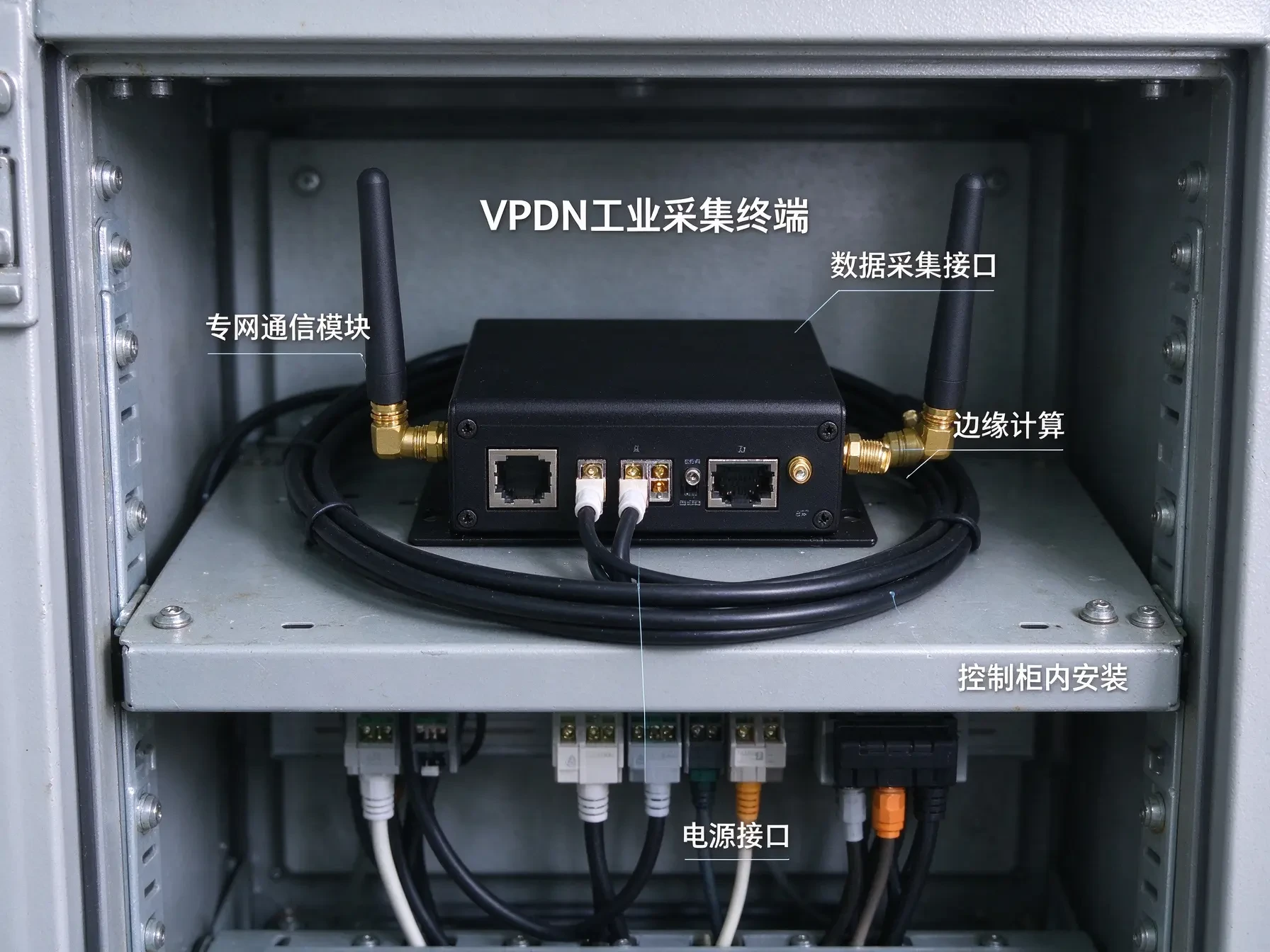
Microsecond IoTExclusive VPDN Dedicated Network Industrial Collection TerminalIoT ConnectivitySolution tailored for industrial use4G/5G IoTPrivate network scenario.
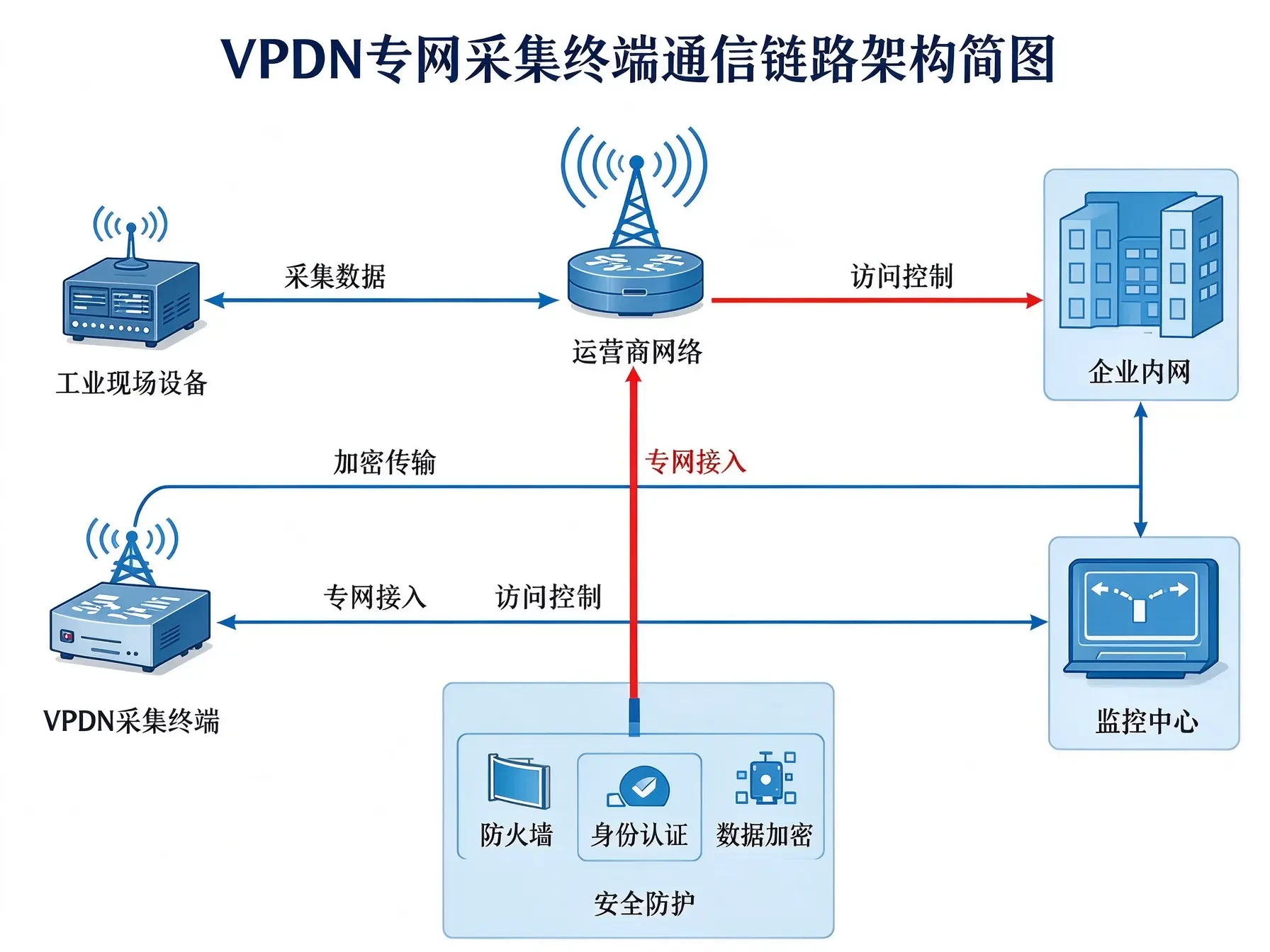
Dedicates high-priority VPDN tunnel resources to real-time production data collection and telemetry command distribution, ensuring priority bandwidth for industrial control traffic during congestion. Supports dual-tunnel redundancy with automatic, seamless failover if one link fails. The gateway features built-in data buffering and resume-on-reconnect capabilities; it caches collection data during brief tunnel interruptions and resends it upon reconnection to prevent data loss. The platform continuously monitors tunnel availability, latency, and packet loss, pushing immediate alerts for jitter or link anomalies to meet industrial project operations and acceptance standards.
Multiple factory and pumping station VPDN collection projects have been deployed, ensuring a stable industrial intranet data acquisition channel.
Implementing industrial VPDN data collection projects, with specialized private network communication solutions available for integration and deployment.