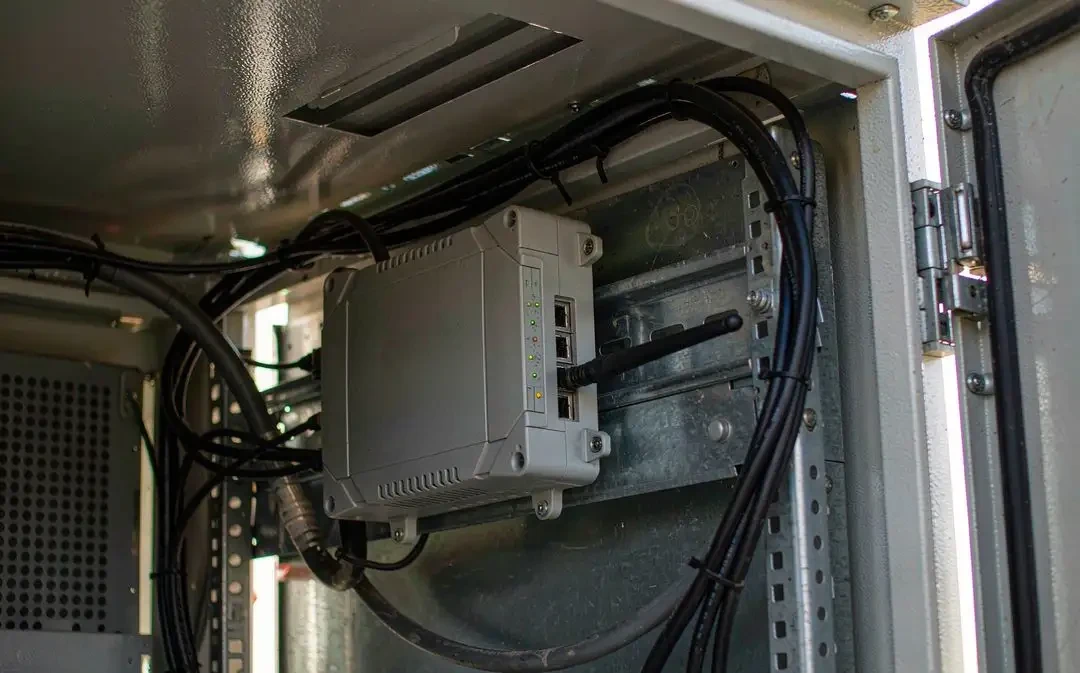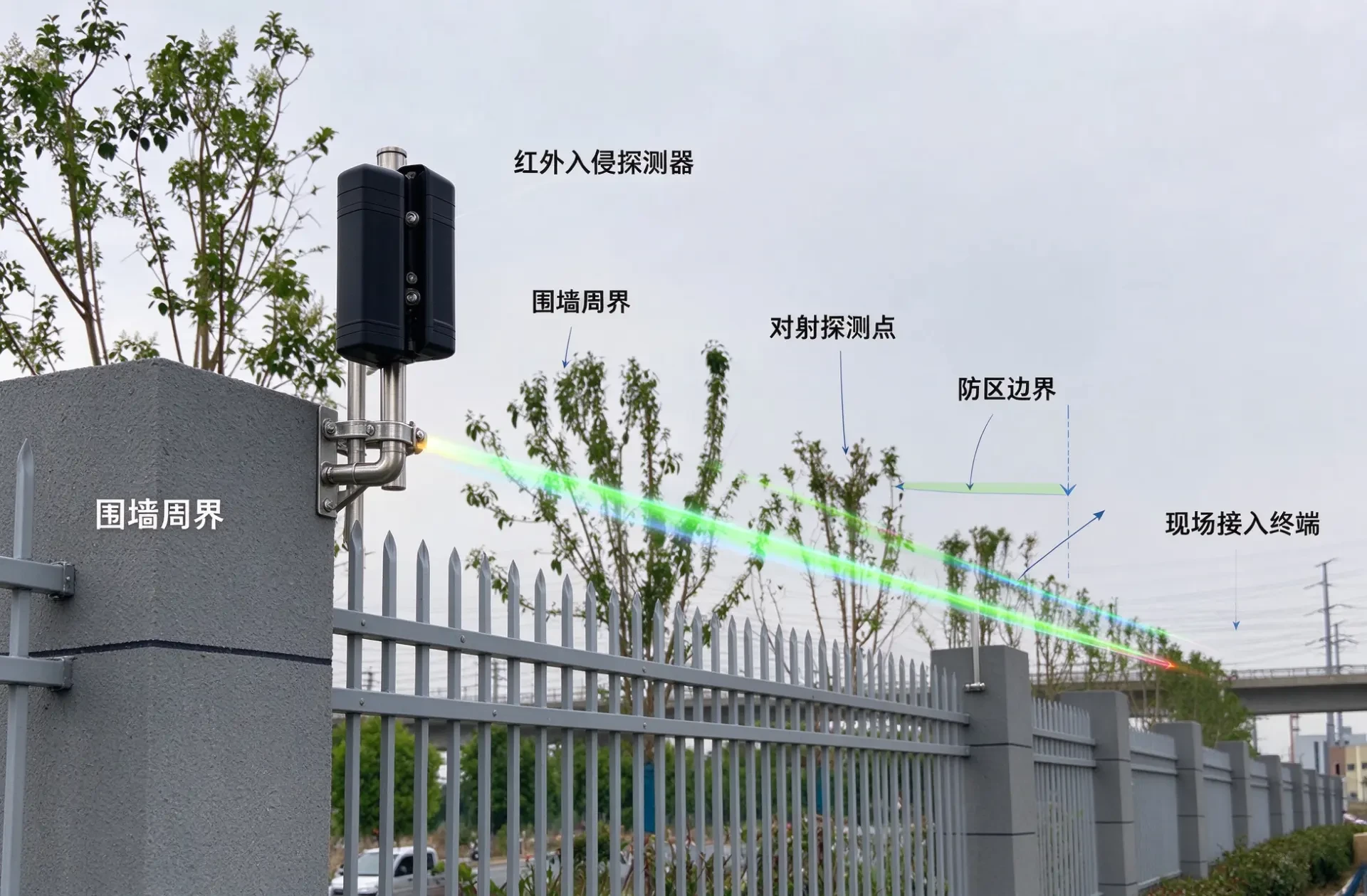
Why do perimeter infrared intrusion alarms frequently "miss" detections? The communication link is often the hidden bottleneck.
Infrared intrusion alarms at perimeters of villas, industrial parks, and factory zones often suffer from delayed or missed alerts due to signal obstruction and base station congestion. These issues typically stem from reliance on generic cellular connectivity solutions. This paper outlines a dedicated connectivity approach for perimeter infrared detectors, focusing on four key strategies: traffic layer isolation, multi-operator dual-link redundancy, a visualized connection management platform, and scenario-specific access registration.
01 perimeter alarms keep failing—what's the issue?
Many operators of perimeter security projects for villas, industrial parks, and factory zones face similar issues: while infrared detector heartbeat data is reported normally, alerts triggered by climbing or intrusion often experience delays or packet loss. With numerous sensors distributed along long fence lines, vegetation blocking signals, and multiple detectors triggering simultaneously, base station resources become congested. This causes alert messages to be dropped, resulting in missed notifications on the backend and lost response opportunities.
Technicians repeatedly adjusted detector sensitivity and alarm thresholds, yet false negatives and delayed alerts continued to occur intermittently.
The inherent limitation of 02 general cellular connectivity
The root cause lies in the limitations of universal cellular connectivity solutions.
- No business priority differentiationStandard public network channels do not differentiate service levels. Heartbeat signals, status reports, and intrusion alerts compete for bandwidth together; when base stations become congested, low-priority alert packets are dropped first.
- Single-link, no redundancyPerimeter points are narrow and scattered with heavy occlusion, causing significant single-link signal fluctuations and lacking automatic redundancy switching.
- Too many invalid signalsFrequent heartbeats generate excessive invalid signaling, increasing network load and triggering disconnections due to signal fluctuations.
Simply swapping antennas or tweaking module parameters can only provide temporary relief; they cannot resolve the underlying congestion and packet loss issues.
03 Dedicated IoT Connectivity Solution for Infrared Intrusion Detectors
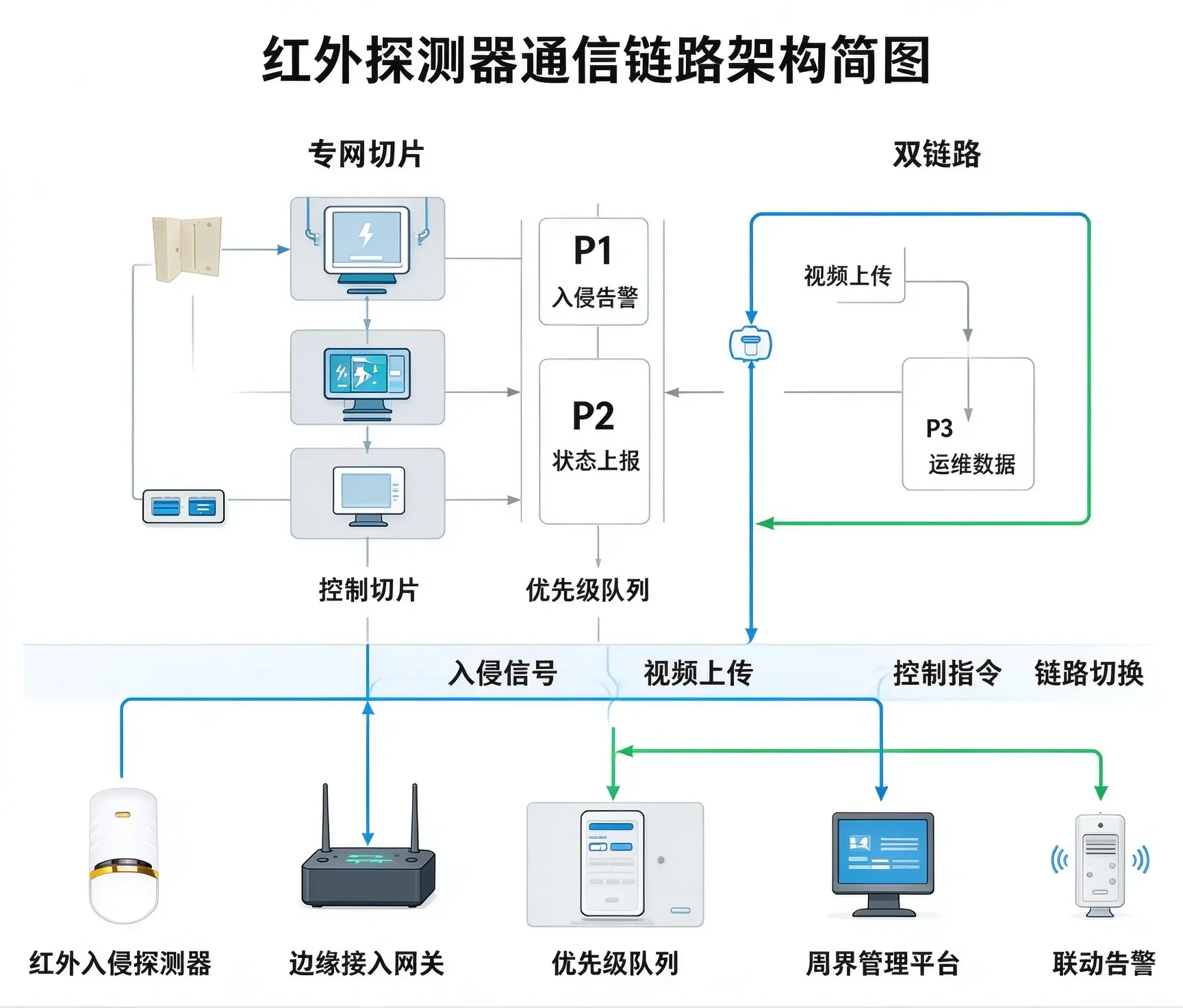
We provide a dedicated IoT connectivity solution for infrared intrusion detectors—a cellular communication base designed for perimeter security.
- Business traffic layer isolation: Trigger intrusion alarm, assign high-priority private network slice to联动 capture command, and upload device logs and status inspection data during off-peak hours.
- Dual-link redundancy across different carriersThe gateway supports dual-link redundancy: automatically switches to the backup channel when the primary link is blocked by walls or vegetation or experiences signal attenuation.
- Visual Connection Management Platform: Automatically detects base station congestion, weak signal, and link disconnection anomalies to push early warnings.
- Scenario-based access registrationSupports batch registration of perimeter access points to reduce disconnection risks after large-scale terminal deployment.
Proven across multiple villa and industrial park perimeter security deployments, with stable intrusion alerts sent upstream and reliable linkage signals dispatched downstream—fortifying the first line of defense.
If your perimeter infrared detection experiences delayed alarms, missed detections, or data disconnections, connect with us to receive a free link assessment.