Do not redeploy cards returned from project offboarding directly.
If recycled IoT cards are not properly decommissioned and unbound, they may retain binding locks, whitelists, and risk control markers from previous projects. This can cause random registration failures and offline issues in new projects. This document outlines the hidden risks of residual card status traces and provides standardized recommendations for exit verification, unbinding, status reset, risk control clearance, and connectivity retesting.
Many integrators have fallen into this hidden pitfall.
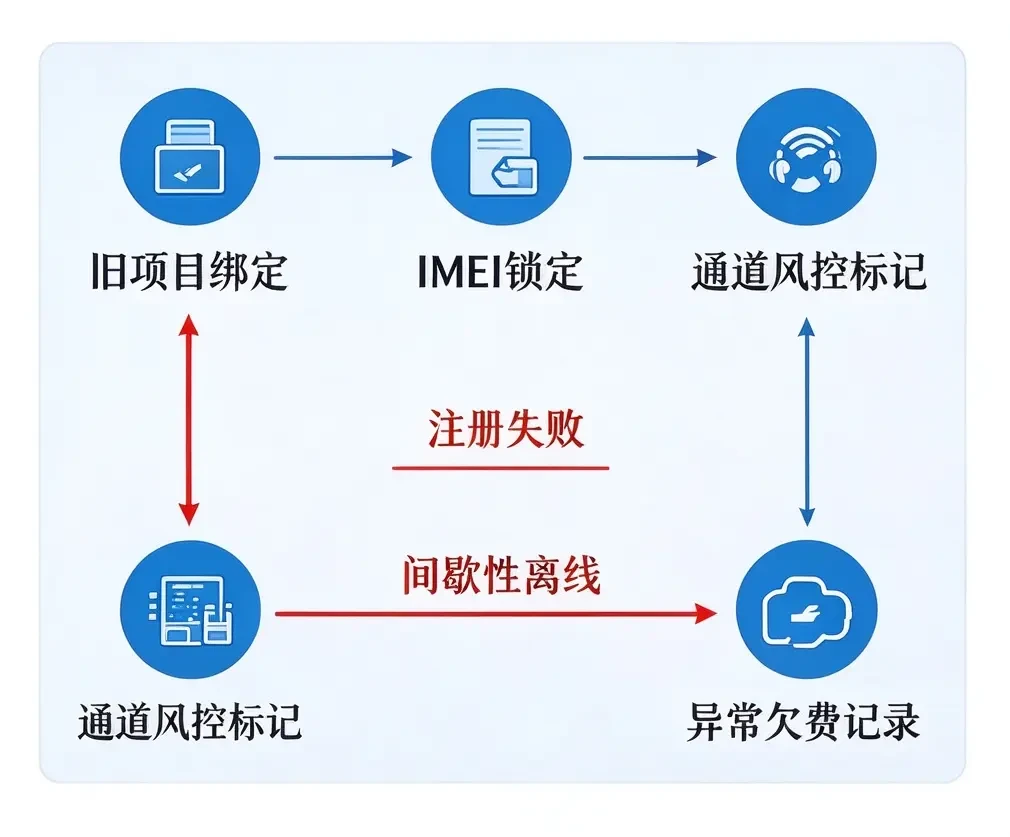
During initial debugging of the new project, a batch of reused SIM cards experienced 50% registration failures and frequent offline events. On-site signal strength was normal and device firmware was verified as functional. After extensive troubleshooting, we identified that the root cause was not card expiration, but rather: abnormal card status flags, active binding locks from the previous project, and channel risk control markers. These issues stemmed from non-compliant de-registration procedures during the prior project's exit phase.
01 cards do not automatically unbind when power is lost; they retain traces from their previous project.
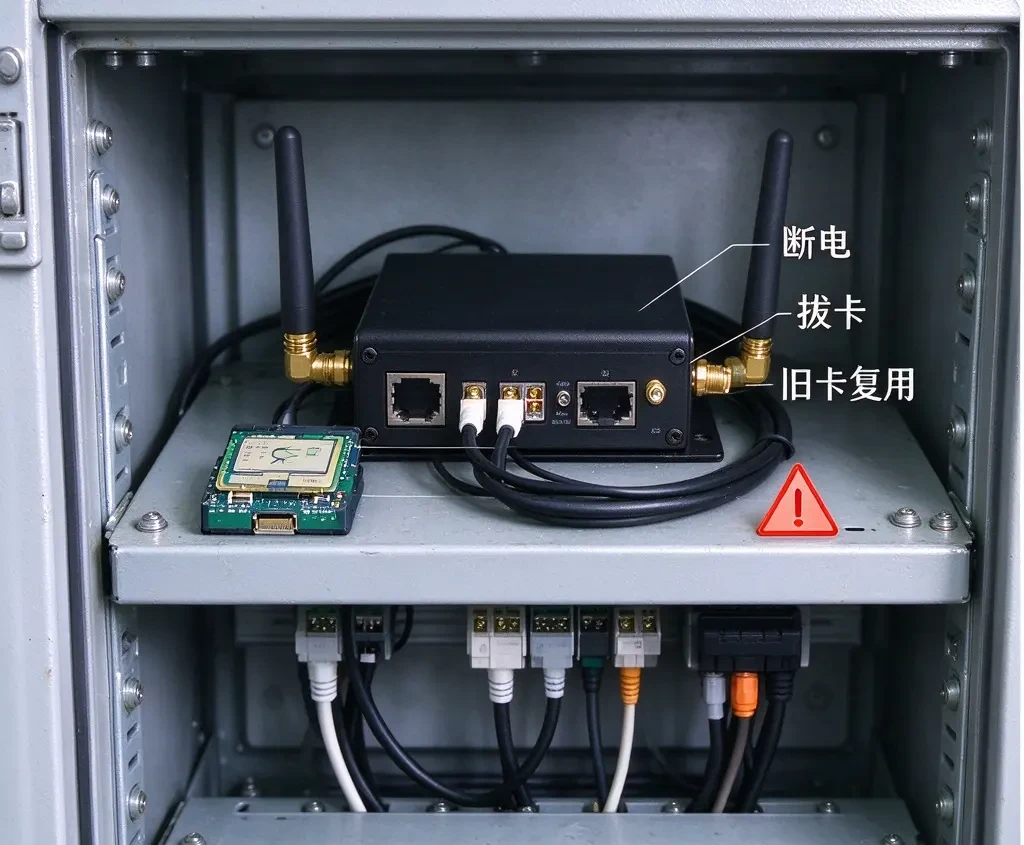
Smart IoT device decommissioning: Many teams simply unplug devices and remove SIM cards for reuse in the next project to save costs. However, backend bindings, device whitelists, industry channel tags, and risk control records do not automatically clear when power is cut. Some dedicated industry SIMs are bound to the device IMEI or a private network specific to that project. Reusing these cards on new terminals can cause registration failures, intermittent packet loss, or inability to access the private network. Additionally, some cards carry unpaid bills or abnormal reporting logs from previous projects, leaving risk control flags that may trigger service restrictions in the new deployment.
This is one of the most elusive issues: not all cards fail, but a random subset exhibits intermittent anomalies. Troubleshooting consumes significant operations time. Channel control rules execute automatically without prior notification about historical flags on the card.
02 recycling and reusing saved on card fees but introduced uncontrollable risks.
High project costs often drive contractors to reuse retired SIM cards. However, many lack standardized workflows: exit verification, unbinding, status reset, risk flag clearance, and connectivity retesting. Skipping even one step creates hidden risks.
Post-incident impact: Extended debugging cycles and client doubts about delivery capabilities. For security and fire safety projects, unstable network connections directly introduce compliance risks. In severe cases, entire batches of cards are blocked by channel risk controls, rendering them unusable and causing direct project delays.
When integrating resources, ask this self-check question: Is there a standardized process for unbinding and retesting returned SIM cards? If the vendor only states that cards are usable before expiration, it likely indicates a lack of status verification controls.
Saving costs is fine, but never skip the card lifecycle closure process. Cost savings require control. Don't wait until a new project stalls and you can't trace the root cause to realize these cards were salvaged from a previous project.
You have existing cards ready for reuse. Please share the card count and application scenarios, and I'll help you organize the exit verification and retesting checklist. We'll focus on a control plan first, without discussing plans or packages.