Smart Pet Feeder Remote Feeding Keeps Failing? The Reliability Challenge of IoT Device Connectivity
Home smart pet feeders often experience timeouts and unresponsiveness when issuing remote feeding or treat commands, with device status updates delayed. The root cause is typically that generic IoT SIM public network solutions are ill-suited for consumer IoT control scenarios. This article outlines a dedicated connectivity approach for feeders, covering lightweight high-priority channels, signal selection switching, short-term command caching with retry logic, and compliant batch device registration.
Many home smart pet feeders work fine with local scheduled feeding, but remote feeding commands from owners often fail to trigger a response or update the device status. In high-rise buildings with complex signal conditions and neighborhoods crowded with IoT devices, network fluctuations can cause timeouts and packet loss for remote feeding and video viewing commands, leading to missed meals and frustration for pet-owning households. For consumer IoT devices, a stable connection is critical to product reputation.
Remote feeding failed for 01; device status update delayed.
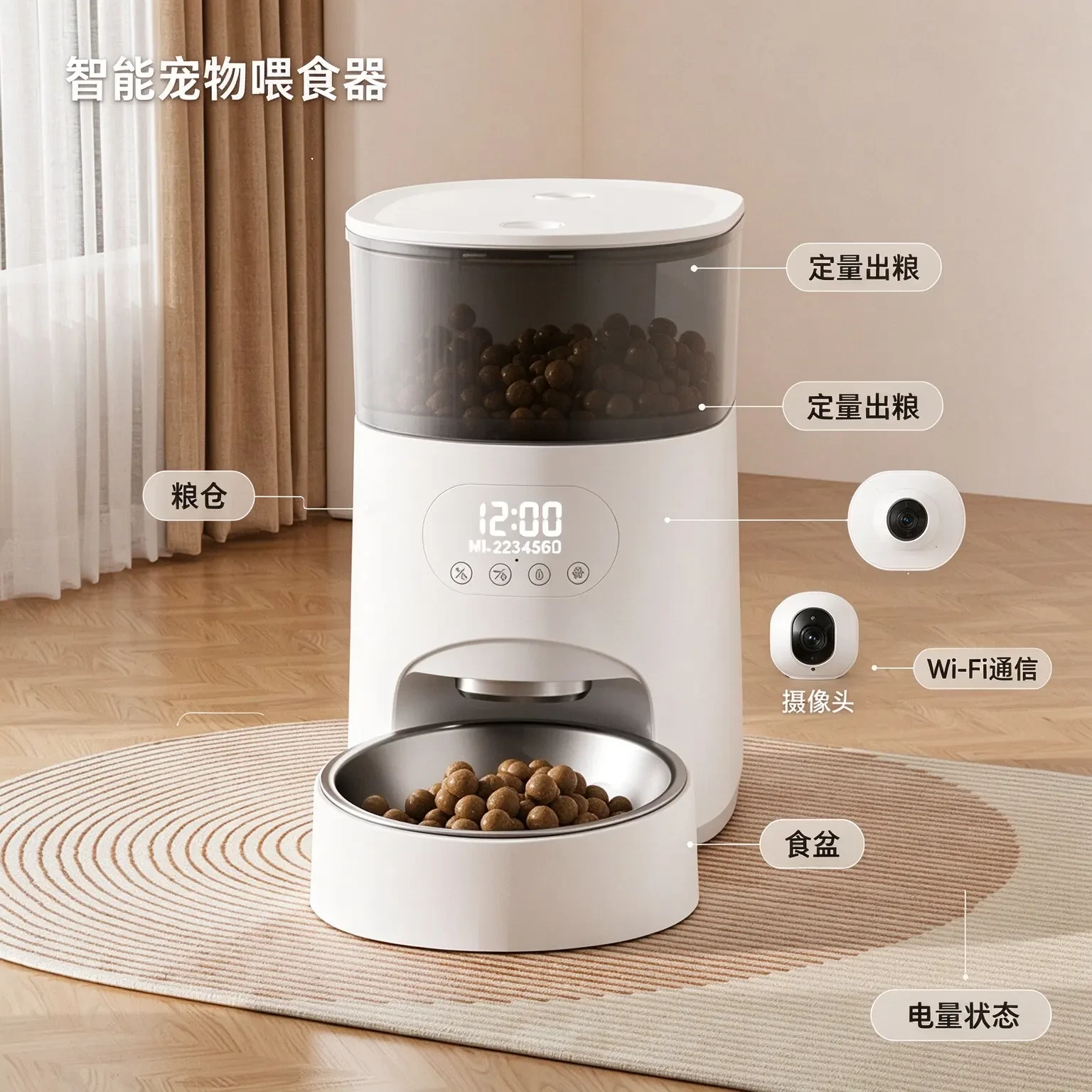
Home smart pet feeders are high-frequency remote-control IoT devices. Their most prominent issues center on the remote interaction process.
The local scheduled feeding feature is stable, but remote commands for feeding and extra meals frequently time out or fail to receive a response. Additionally, data such as remaining food volume, feeding logs, and online status experience significant transmission delays. In high-rise residential buildings, thick walls cause signal obstruction, while heavy network congestion during peak hours—due to numerous smart home devices sharing the same gateway resources in the area—leads to frequent loss of remote feeding commands. Despite repeated troubleshooting by brand after-sales teams involving firmware updates and motor mechanism inspections, the intermittent issue with remote control remains unresolved.
Limitations of 02 universal IoT card public network solutions
Traditional general-purpose IoT SIM public network solutions have significant compatibility limitations.
- No business priority differentiationThe standard access channel lacks business priority differentiation. Device heartbeats, battery reports, grain discharge logs, and remote feeding control commands are multiplexed together. When the base station is congested, control commands are easily dropped.
- Single-link accessSingle-link access: indoor signal fluctuates significantly due to wall interference; no link redundancy.
- Frequent heartbeats triggering risk controlFrequent heartbeat reporting generates massive invalid signaling, triggering access risk controls and causing devices to go offline unexpectedly.
- Retry on no instruction cacheMissing instruction cache retry mechanism: a single packet loss causes immediate failure with no retransmission.
03 Smart Pet Feeder Dedicated IoT Connectivity Solution
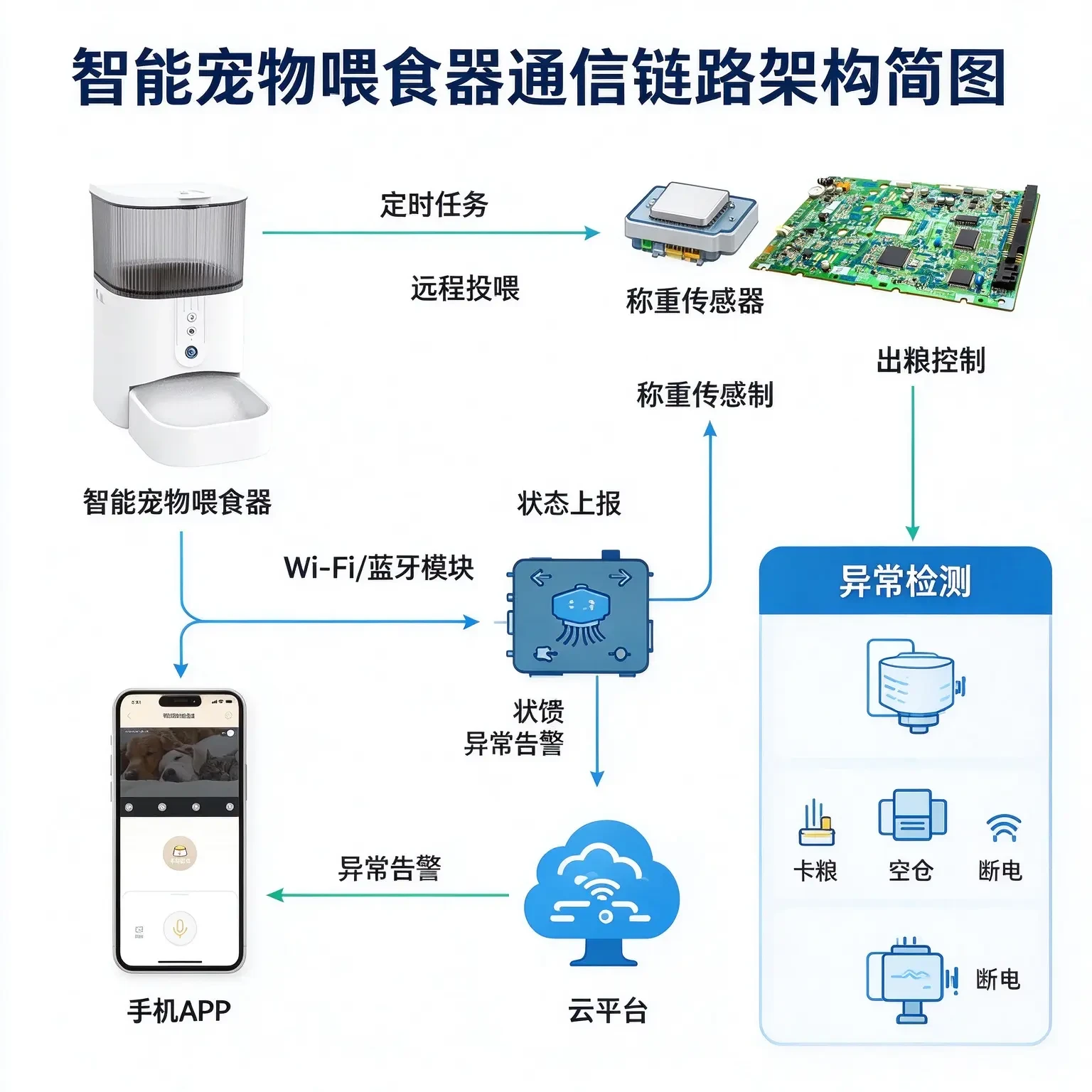
We provide a dedicated IoT connectivity solution for smart pet feeders, optimized for consumer IoT control scenarios.
- Lightweight High-Priority ChannelRemote feeding and meal control commands are assigned to a lightweight, high-priority channel; dispensing logs and remaining food level data are batch-uploaded during idle periods.
- Signal Priority Switch: Supports signal-based switching for optimal performance in complex indoor wireless environments.
- Retry with short-lived instruction cacheConfigures a short-term retry mechanism for command caching on the gateway side to improve remote command delivery success rates.
- Batch Device Compliance FilingUnified platform monitoring of terminal online rate, command latency, and packet loss. Batch device onboarding with compliant access registration to reduce the risk of mass disconnections due to risk control.
Multiple consumer-grade smart pet hardware devices have been successfully integrated, enabling stable and reliable remote feeding commands to enhance user experience.
Currently developing consumer IoT hardware projects such as pet feeders, with the capability to deliver tailored IoT communication solutions.