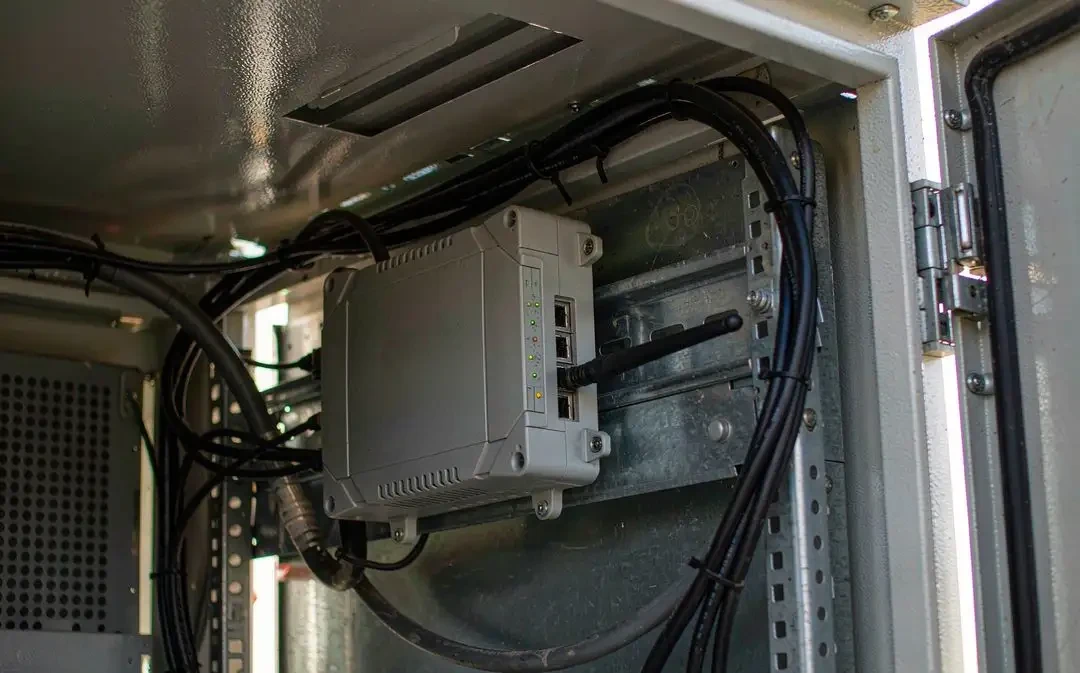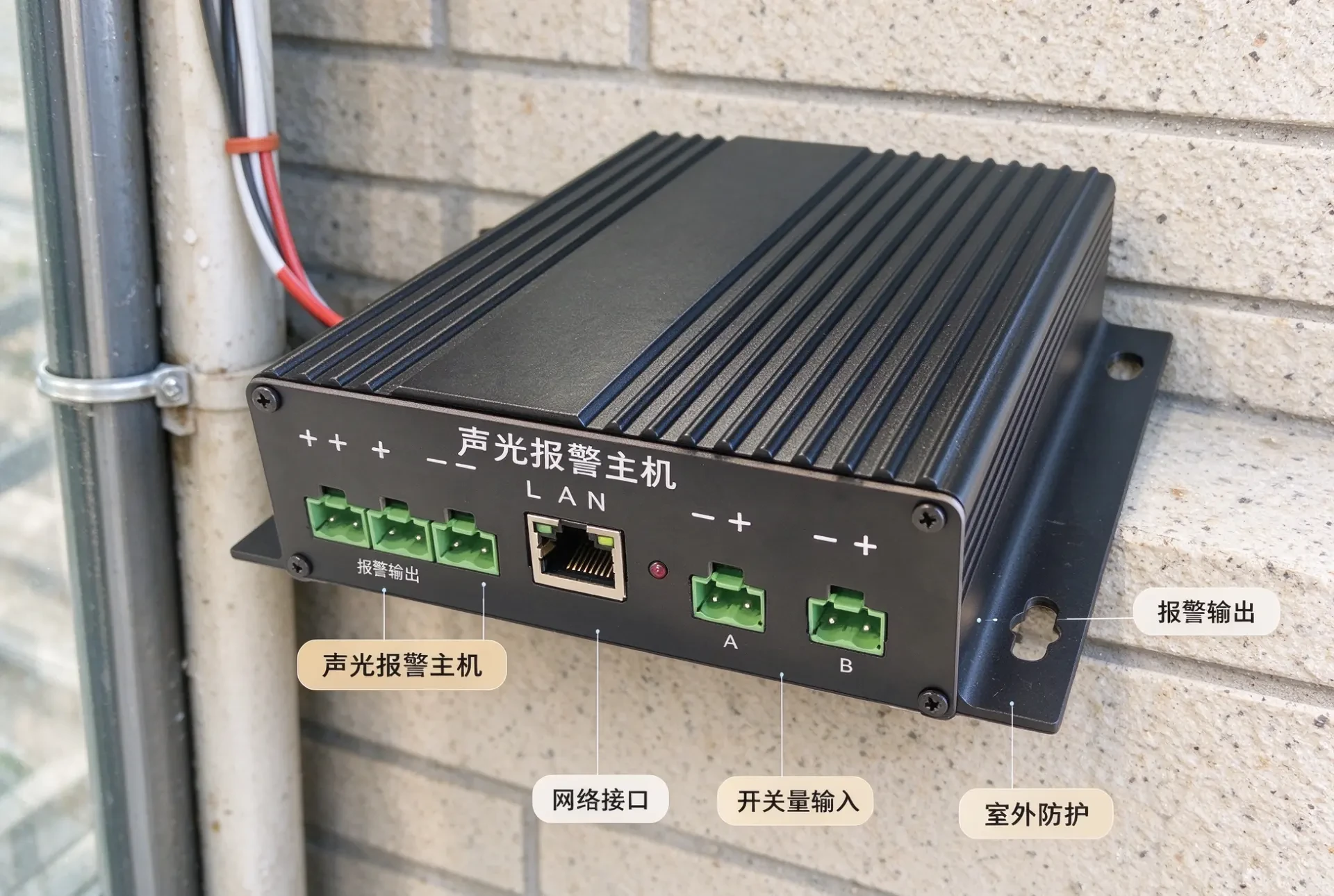
Why is your audio-visual alarm host lagging? Network communication delays are crippling your entire security system.
For villas, street-front shops, and small server rooms, networked linkages for sound-and-light alarm hosts often suffer from command delays or losses, resulting in "alarm received but no alert triggered." This article outlines a practical implementation approach for an integrated networking solution, focusing on four key aspects: high-QoS dedicated channels, command caching with resending, district-based packet control, and link diagnostics.
01 integration out of sync: alert received but no alarm triggered.
Villas, street-front shops, and small server rooms often experience synchronization issues when linking sound-and-light alarm hosts in networked projects.
Local standalone mode offers fast, responsive sound and light triggers. However, after connecting to an IoT platform for联动 (linkage), issues frequently occur: detectors report intrusion signals, but commands from the platform to activate sound/light or mute/close experience significant delays or are lost entirely. When multiple alarm hosts in the same area receive linkage commands simultaneously, base station concurrency increases, reducing command delivery rates. This leads to the frustrating scenario of "alert received, but no alarm sounds."
Engineering technicians repeatedly verified the host protocol and interlock rules, but were unable to achieve a stable resolution.
02 Universal connection scheme does not meet low-latency coordination requirements
Traditional general-purpose cellular connectivity does not meet the low-latency requirements of security system integration.
- No business tierPublic channels lack business prioritization; host status updates, log uploads, and linkage control commands compete equally for resources. During peak hours, control messages are easily displaced.
- Missing signaling convergenceMissing signaling convergence policy: multiple hosts synchronously reporting at periodic intervals generate excessive requests, causing network congestion.
- No retry mechanismNo dedicated retry mechanism during brief link fluctuations; control command packets lost are not automatically retransmitted.
- Zone resources are not isolated: Lack of zone resource isolation causes command latency when multiple alarm hosts in the same zone connect simultaneously.
03 Integrated Networked Solution for Sound and Light Alarm Host
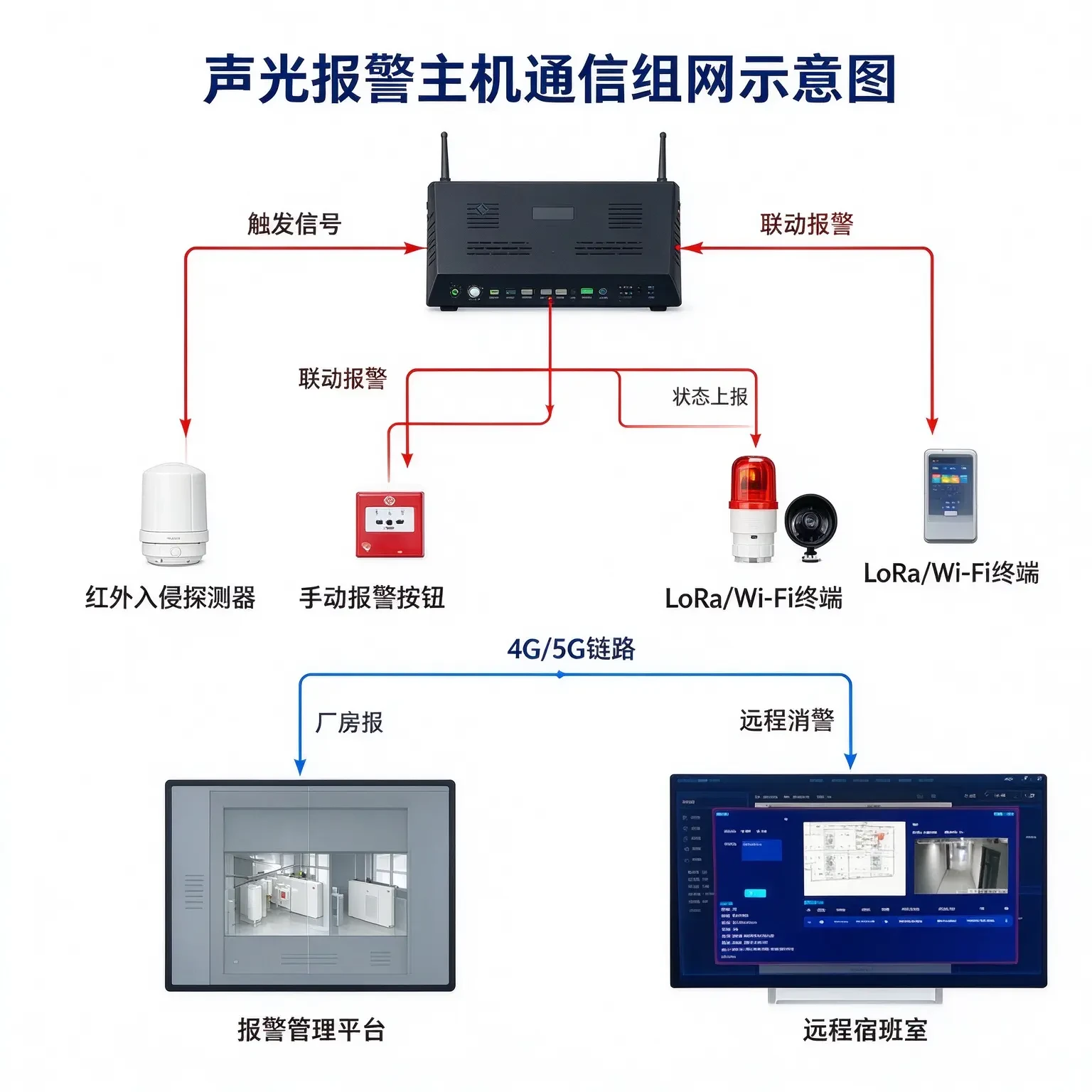
We deliver an integrated IoT solution for networked sound and light alarm hosts.
- High-QoS Dedicated ChannelLeverages dedicated network access resources to configure high QoS channels for linked control messages (e.g., sound/light activation, mute deactivation), and schedules device logs and historical records for off-peak transmission.
- Instruction cache reissueThe gateway includes a built-in instruction cache retry mechanism. During brief link fluctuations, it temporarily stores instructions and resumes ordered delivery once the network is restored.
- District-based Group Control: The platform supports terminal control by grouping devices per region, allows custom heartbeat reporting policies to reduce invalid signaling.
- Link Diagnosis Capability: Features link diagnostics to quickly distinguish between host device failures and network congestion.
The solution balances low-latency command execution with transmission reliability to ensure synchronized response of audio and visual alarms.
The networked audio-visual alarm host project is in preparation or debugging. You can schedule a joint concurrency stress test.